
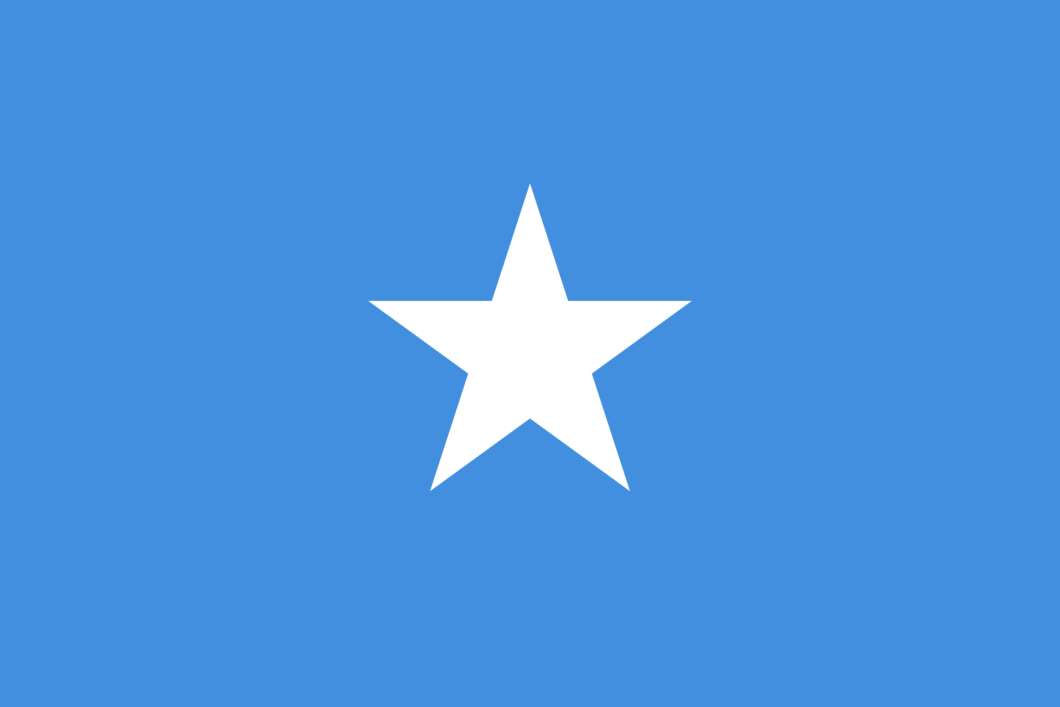
Somalia has an unstable economy, a population mostly made up of nomads, and a history of conflict with neighbouring nations. The country has faced many difficulties due to periodic droughts and approximately 1 million refugees, making it hard to achieve political stability and economic development in the volatile Horn of Africa region, which is strategically important.
A parliamentary government was established in 1960 for a society of fewer than 2 million linguistically, religiously, and culturally homogenous people.
After gaining independence, Somalia faced the challenge of finding a better land base and more natural resources to exploit commercially. The country's arid and harsh environment made survival difficult, and most Somalis relied on pastoral nomadism or seminomadism for their livelihood. They followed their livestock in seasonal searches for pasture and paid little attention to regional borders, following the pragmatic tradition of their forebears. The people in the south and northwest who relied on irrigated or rained cultivation for at least part of their subsistence depended on a minority of the Juba and Shabeelle rivers. The main ways of life were subsistence pastoralism and agriculture, which often interchanged depending on the seasons and fickle weather.
Although Somalis share a common culture, they have traditionally been divided into kin-based groups of different sizes. They all claimed descent from a common male ancestor through the male line.
Every clan family consisted of several clans, each with its lineage. Traditional relationships between descent groups were ones of competition or, at best, temporary alliances against other groups.
In Somalia, descent groups continue to be significant with modifications following independence from colonialism. As a result of the modifications, clan families became a vital part of the political party formation process. A single block of descent groups could form a party, whereas others arose from a coalition among several descent groups. Some clans and lineages were associated with regional interests, but others were so large and dispersed that their interests reflected significant intergroup variability.
As the power broker for all political affairs in the 1960s, the Somali Youth League (SYL) became dominant. Due to its heterogeneous membership, its most significant challenge was going beyond the general assumption of most Somalis that the government exists only to provide resources and opportunities. During this period, there was intense intraparty competition for these commodities since they were scarce. Political leaders quickly found it necessary to give parliament members material compensation for their continued parliamentary support. In addition to the government assistance they could obtain for their constituents, legislators grew accustomed to many personal perks.
Inadequate resources and skilled personnel contributed to slow progress. As time passed, the inexperienced and inefficient bureaucracy also became more corrupt. The government also resisted taking strong measures that could escalate conflicts.
A common obstacle to national unity among new African states was overcome by the homogeneity of the country and the sense of nationhood among its people. One of the critical factors in developing this sense of oneness was the awareness that Somalis still resided in adjacent countries, including Ethiopia, Kenya, and French Somaliland, even after the country became an independent state. Citizens were divided over how to achieve a Greater Somalia, but all supported the concept of unification. The effort to resolve this issue took a lot of political energy and time, resulting in problematic relations with Ethiopia and Kenya, eventually leading to conflict over territorial integrity.
A constitutional provision aimed at creating a Greater Somalia was met with angry responses from neighbouring states. The Soviet Union agreed to provide military equipment, advice, and training to the government without support from the United States.
Somali relations with neighbouring countries were transformed from confrontation and hostility to accommodation under Prime Minister Mohamed Ibrahim Egal, who came to power through the electoral process in 1967. The army grew with Moscow's assistance. Foreign observers, including the government in Washington, remained wary of Soviet influence but felt that Egal and other Somali leaders were pro-Western and that Western countries, such as the United States and other Western nations, provided equipment and training to Somalia's national police force. Despite this, the army became the country's most well-organized and assertive institution, thanks to its leaders being influenced by Soviet political and military doctrine.
A group of senior military officers led a coup d'etat on October 21, 1969, to overthrow Somalia's parliamentary government. Major General Mohamed Siad Barre, the leader of the coup, initially argued that the coup had been motivated by corruption and nepotism within the civilian government. They accused the regime of misusing public funds and catering to tribal interests. Having established the Supreme Revolutionary Council (SRC), the coup leaders set about revolutionizing society and the economy after changing the form of government.
Rather than protesting, most Somalis accepted the new military regime because they could not obtain the resources and opportunities they expected from the parliamentary system.
The State Resource Corporation (SRC)
The SRC was established to build a socialist society and economy in Somalia under the leadership of Siad Barre. They adapted Marx, Engels, and Lenin's doctrine to meet Somalia's needs. During the 1970s, the government implemented socialist policies to achieve socialist goals. The State Resource Corporation (SRC) nationalized large portions of the economy while investing in social and economic infrastructure development. To supplement these efforts, programs for self-help and crash courses were introduced. However, the government also implemented an austerity plan, including pay cuts and a development tax on state-owned and private industries. Despite these measures, the country still needed to import capital and consumption goods to maintain a reasonable standard of living.
During the 1974-75 drought, many nomads died due to famine and loss of livestock. The government spent significant money to assist the needy and established relief camps, relocating hundreds of thousands of individuals. The failure of the food grain harvest also left many cultivators needing assistance. The government aimed to gain more control over the predominantly nomadic population and increase food production, and it partially achieved this goal by settling nomads and converting them to agriculture. The government implemented several social reforms to promote Somalis' economic independence and adapt to socialist lifestyles.
During the initial seven years of Siad Barre's regime, the Soviet Union provided significant military and economic assistance. This raised concerns among Western and African nations because they were worried about the USSR's influence over the Horn of Africa. 1976, the Somali Revolutionary Socialist Party was created to replace the military government. The Soviet Union also supported it. The party was meant to be a mass-based political organization replacing the military regime. However, the transition remained superficial as the fundamental doctrine and power holders remained unchanged.
Due to the presence of a large number of Soviet technicians in Somalia, many Somalis started feeling resentful towards them. Despite the earlier agreement between the two governments to maintain friendly cooperation, very few felt comfortable in their regular interactions with the Communists. However, foreign observers noted that Siad Barre, the Somali leader, was unlikely to comply with Soviet demands unless they were equally beneficial to Somalia.
In 1977, a disagreement over Greater Somalia persisted in Moscow, leading to an undeclared war between Somalia and Ethiopia. To secure the right of self-determination for the Somali population living in approximately one-third of Ethiopia's traditionally recognized territory, the government in Mogadishu backed organized Somali guerrilla groups that had been active in the Ogaden region of Ethiopia for many years.
In the mid-1970s, Somali guerrillas in the Ogaden struggled and received significant aid from parts of Siad Barre's Soviet-equipped army. When Emperor Haile Selassie was overthrown, a Marxist Ethiopian military regime took over and responded with the support of the United States, who had backed Haile Selassie. Soviet advisers and Cuban combat units were airlifted to Ethiopia to offer assistance. Due to Moscow's support for the Ogaden war, Siad Barre withdrew from a treaty, which led him to expel Soviet personnel from his country. This decision allowed him to build friendly relationships and cooperation with them. In the end, the Somalia-Ogaden military intervention ended in early 1980, when Somali forces were severely beaten by a superior enemy, losing extensive equipment and ultimately abandoning their efforts to colonize the region.
As a result of the military defeat, the president's primary task was to restore his tarnished image among his dissatisfied constituents.
Somalia's population, which had reached nearly 4 million in early 1982, was severely depressed, and its economy was doomed to failure. Somalia ranked eighth among the world's least developed countries with a per capita income of US$130. As far as absolute authority was concerned, Siad Barre and a few close people remained in charge.
During Siad Barre's regime in Somalia, he criticized his predecessors' use of "tribalism" to gain political power. However, he then began to rely heavily on clan members to fill critical positions, causing the tradition of tribalism to resurface. The United States considered Somalia's location on the Indian Ocean and the Soviet-built military facilities in the oil-rich Persian Gulf area strategically crucial for protecting all oil interests in the region. As a result, the government in Mogadishu responded positively to communist overtures, just as it had done in the past.
In late 1980, the president declared a state of emergency, and the newly established SRC approved his orders. The tradition had resurfaced despite Siad Barre's zeal to destroy tribalism with which his government once attacked its predecessors, as he surrounded himself with clan members in leadership roles. The strategic location of Somalia on the Indian Ocean, as well as the Soviet military facilities built there, were vital to U.S. oil interests in the Persian Gulf.
Historical Setting
Somalians have inhabited present-day Somalia for over 1,000 years. In the late nineteenth century, however, three European powers (Britain, Italy, and France) imposed colonial rule on Somali-occupied territory. Ethiopian claims were extended there, resulting in nationhood.
A radically different transition to independence occurred in Somalia than in most African countries. Under Italian administration, the former Italian colony was placed under trusteeship in 1950 by the United Nations.
Conflicts with Ethiopia and Kenya and the integration of former colonial territories resulted from Somalia's irredentist demands in the early post-independence period. Conflicts within politics were primarily driven by methods of dealing with difficulties. Politicians often exaggerate the country's urgent development needs to appeal to their group to gain electoral support and expand their influence.
The composition and leadership of parties fluctuated as new parties emerged and others declined. Several parties attended the national elections, some with only one candidate. Although the Somali Youth League was the leading party even before independence, it has remained the most dominant party until today. In the Somali Youth League, all political parties' leaders served simultaneously, without significant ideological differences. Organizing parties along clan-family lines or within a clan family was the most significant tendency, although alliances often crossed clan lines.
As a result of the conflict between competing interest groups within the parties, the time and energy spent aggrandizing each party instead of dealing with the country's problems as a whole, and the corruption that had permeated government and parliament, disillusionment with the democratic process became apparent. Major General Mohamed Siad Barre led a bloodless coup against the Somali National Army government on October 21, 1969.
Somalia's long tradition of democracy was extinguished as the military-dominated leadership in Mogadishu made all critical decisions and communicated them to the primarily military structure in control at the regional and local levels. The Supreme Revolutionary Council intended to establish a comprehensive economic, social, and political order based on scientific socialism. The new government did not tolerate opposition to its policies. Some development projects were introduced as part of the Supreme Revolutionary Council's efforts to maximize resource profits.
A new Somali Revolutionary Socialist Party was formed in 1976, and the Supreme Revolutionary Council was abolished. Former Supreme Revolutionary Council members were appointed to executive positions within the party and key government positions. There was no change to the existing hierarchy, only a broadening of it.
Early in the 1970s, Somalia's relations with Ethiopia deteriorated when Siad Barre's government-backed guerrilla operations carried out by Somali separatists in the Ogaden, appealing to a powerful pan-Somali sentiment. The rebels engaged Ethiopian troops in the predominantly Somali region by mid-1977 after well-equipped elements of the army cooperated openly with them. Somalia and the Soviet Union signed a treaty of friendship and cooperation in 1974, and the Soviet Union became Somalia's primary military benefactor. The Russian government received rights to strategically located air and naval installations as a reward for its assistance.
Division of Somali-Occupied Territory
- Without consulting Ethiopia, Britain and Italy agreed to treaties in 1891 and 1894 that defined the boundaries between their respective zones of influence. The inland boundaries divided the territories claimed by Ethiopia by placing the Ogaden region in the Italian sphere and the Haud region in the British sphere
- In 1896 Italian forces invading Ethiopia from Eritrea to enforce Italy’s claim to a protectorate were resoundingly defeated by Menelik’s army at the battle of Adowa. Despite the resulting opposition in Italy to colonial ventures and the financial collapse of the Filonardi Company, the military disaster did not weaken Italy’s position in Somalia.
- A strong Ethiopian garrison had been established at Harer, just beyond the border tentatively claimed by Britain in its role as protector of Somali clans inhabiting the area.
- Britain’s only claims in the interior were based on the treaties signed with Somali clans whose primary motivation for signing had been to obtain protection against the better armed Ethiopians. Nevertheless the British agreed to pull back the protectorate’s boundaries by about eleven kilometers opposite Harer and to concede most of the Haud region to the east. The only reflection of Britain’s promised protection of the Somalis appeared in two clauses of the treaty, one requiring the Ethiopian government to provide them with “good treatment” and orderly government and the other guaranteeing the nomads pasturage on either side of the new frontier. Rodd expressed misgivings over the loss of territory, which included half of the generally fertile northern highlands and the vital seasonal grazing area of the Haud, but the Foreign Office considered that Ethiopia’s goodwill was of primary consequence. The treaty was not published, the boundary was not immediately demarcated, and Ethiopian rule over the region was only lightly felt.
- Somalia’s present-day border with Kenya is a result of the secret arrangements that brought Italy into World War Ion the side of the Allies
- A treaty drawn up in 1920 and ratified in 1924 provided that Italy take over the area west of the Juba River up to the forty-first parallel, including the port of Kismaayo (Kisimayo). Known asJubaland, itwas incorporated into Italian Somaliland the following year. The new boundary left a Somali-populated area (Northern Frontier District) within Kenya that was equal in size to the ceded territory.
Mohamed Abdullah
- The only impediments to the expansion of colonial rule were the competing territorial claims of the European powers and the Ethiopians. Somali clans acquiesced in—and frequently sought— treaties of protection offered by Britain and Italy as well as the subsidies and trading privileges that accompanied them. Direct European involvement was limited to the ports, which historically had been under non-Somali control, and was primarily concerned with improving trade. During the 1890s, for example, the British presence in the protectorate consisted of only about a dozen civilian officials, acompany of Indian troops, and some local employees stationed in Berbera, Seylac, and Bulhar.
- Summoning an army of 3,000 dervishes, Mohamed Abdullah seized the traditional watering place of the Isaaq at Bura and massacred the inhabitants of a Qadiriya settlement at Sheekh (Sheikh) about sixty kilometers from Berbera. His warriors also laid seige to the Ethiopian garrison at Jijiga and spread the insurrection among their Darod kinsmen in Kenya. Between 1901 and 1904 four expeditions were mounted to hunt down the imam. The first two were composed of British-led Ethiopian soldiers and Somali irregulars, and the last two were upgraded with several thousand reinforcements that included British regulars, Indian units, elements of the King’s African Rifles, and Afrikaner mounted troops from South Africa. The Somali contingent was the largest in each of these military exercises. Although British troops met the dervishes in several engagements, the imam always eluded capture.
- Mohamed Abdullah did not gain extensive support in Italian Somaliland, although some clans there declared themselves dervishes and robbed cattle from the herds of other Somalis who were deemed too accommodating to the Italians.
- The truce lasted only three years—long enough for Mohamed Abdullah to regroup the dervishes for ajihad (holy war) against the British and Ethiopians as well as Somalis who rejected his teachings.
- In 1910 the British government, unwilling to invest more manpower and resources in the colony, ordered a withdrawal to the coastal area and abandoned the interior to him. Protected Somalis were issued rifles and left to devise their own defenses. Over the next few years the dervishes terrorized the entire region, taking a heavy toll among the clans that opposed them.
- Rejecting surrender and pursued by Somali irregulars, the imam fled to a camp in Ethiopia to reorganize his followers but died there of natural causes later in the year. Leaderless and demoralized, the dervish movement dissolved.
- Mohamed Abdullah’s twenty-year defiance of the British Empire was more than a local insurgency against colonial rule. To some modern Somali observers, it contained the elements of a war of national liberation. For the imam it was a holy war aimed not only against the infidel but also against the Muslims who collaborated with the nonbeliever. In proclaiming the holy war, Mohamed Abdullah had cited as his objectives the purification of Islam, the ousting of foreigners from Somali territory and, significantly, the unification of the Somali people. So great was his personal appeal that he could command a loyalty that superseded that of lineage. But to a great extent the insurrection was a continuation of the traditional feuds among rival clans, a confrontation between nomadic and coastal Somalis, and an excuse for large-scale cattle rustling.
- In the final analysis Mohamed Abdullah was defeated as much by his fellow Somalis as by the British. They turned against him, tired of the chaos, destruction, and famine that were the consequences of his insurgency. British-led Somali forces took part in all the campaigns against him. Yet, with the emergence of nationalism in its modern form, Mohamed Abdullah has been hailed as a popular hero in Somalia and the prime source of the Somali sense of national identity.
Italian and British Colonial Administration
- Early hopes for resettling farmers from Italy’s poorer regions in the colony’s fertile areas foundered, and other ambitious agricultural schemes involving concessions for large commercial plantations were slowed by the unforeseen difficulty involved in recruiting local labor. The potential labor market was composed largely of the sedentary peoples who had formerly been slaves or clients of the dominant Somalis. These people, however, preferred work on their own lands to wage labor, whereas the pastoralists were uninterested in agriculture. The colonial government at an early date began compulsory labor recruitment, which continued even after passage of new labor laws that provided for better conditions for workers.
- The first fascist governor of Italian Somaliland, Cesare Maria de Vecchi, brought with him to the colony a pro-pensity for construclion.
- The fascist administration was highly centralized, although amenable indigenous leaders were allowed to exercise a degree of influence not permitted in the British colony and were employed by the Italians to open the way for the “peaceful penetration” of the interior.
- Somali judges were appointed to administer Islamic and customary law. Somalis staffed the lower ranks of the paramilitary colonial gendarmerie (Corpo Zaptié) established in 1923. Limited educational facilities were created at the primary level for Somalis, a small number of whom held minor clerical positions in government offices.
- Economic development in British Somaliland between the two world wars was limited. After 1920 the colonial administration was required by the home government to finance all operations in the country from its own resources, but attempts to impose direct taxation proved impossible to implement because of Somali intransigence. Most revenue was derived from import and export duties, but the important trade route to Ethiopia, initially cut during the insurgency, was permanently closed by the completion of the Djibouti railroad.
- Some assistance was also given to encourage improvements in agriculture carried out by the Somalis on their own initiative in the better watered areas of the northwestern highlands.
- Other British efforts were aimed at the expansion of the extremely limited educational facilities. The first effort to increase the number of schools, however, was linked to the imposition of direct taxation, and opposition to taxation became popularly linked with opposition to the schools. This opposition was reinforced by conservative religious sentiment that considered British-sponsored education a threat to Islam.
The Somalis: Origins, Migrations, & Settlement
- Somali social and political organization is based on kinship groups that range in size from the clan-families, of which there are six, to lineage segments, of which there are thousands (see The Segmentary Social Order, ch. 2). Their traditional genealogies trace the ancestry of clan-families to eponymous Arab forebears who belonged to the Quraysh, the tribe of the Prophet Muhammad, and ultimately to a common ancestor. According to these accountts and other traditional history, these Arabs arrived in the northern part of the Horn of Africa at various times between the tenth and fourteenth centuries and established lineages that in the course of several hundred years moved to the south and west, displacing the Oromos as they went.
- Although versions of the traditional genealogies varied in their telling from group to group, it was believed that the clan-families stemmed from the sons of Agiil—Sab and Samaal (hence, Somali). From Sab were descended the Digil and the Rahanweyn, while the Dir (recognized as the oldest of the clan-families), the Hawiye, and the Isaaq were in patrilineal descent from Samaal. (The Isaaq, however, insisted in their account on direct descent from Aqiil.) The Darod, largest of the clan-families, claimed matrilineal descent from Samaal through Dir’s daughter, who was taken as wife by its founder, Jabarti ibn Ismail, himself a Quraysh and a descendant of Aqiil (see fig. 2).
- Somali class of Arabic-speaking officials, merchants, craftsmen, and landowners similar to the Swahili-speaking Arab-Bantu class that emerged to the south along the East African coast. In some cases Arabs moved inland and established enclaved villages vévher?, as the gibil'aad (pale skins), they became clients of the Somalis.
- The two branches of the Somali people—the Samaal and the Sab—were differentiated culturally, physically, and linguistically, and they also developed divergent patterns of social and political organization. The Samaal nomads practiced what 1.M. Lewis has described as “pastoral democracy,” without permanent chiefs or formal courts. Whatever government that existed was conducted in the shir, an assembly composed of all adult males in a clan or lineage group. Although no less warlike, the Sab, by contrast, characteristically confederated under the leadership of a dominant lineage that held title to the land and defined themselves by the area in which they lived as well as by ties of kinship. In the southern river valleys where they settled, the Sab practiced a sedentary economy based on trade and herding and on the crops raised by their non-Somali clients. Affiliation with a landholding lineage, either by kinship or by adoption as a client, conferred the right to use its arable resources
- By the twelfth century the ancstors of some clan-families were tablished in the territories where most of their present-day descendants live, but movements of specific groups continued into the nineteenth century, both over long distances and as slight shifts within a given clan-family area or lands contiguous to it.
- The Darod, the largest of the Somali clan-families, range from the north to contiguous areas of Ethiopia. They are also situated west of the Juba River and into Kenya, an area from which they drove the Oromos in the mid-nineteenth century after the Darod had been forced out of the region between the Juba and Shabeelle rivers by the Rahanweyn, who had already settled there. It has been suggested that an important reason for the conflict between the two groups was that the Rahanweyn, who were cattle herders and cultivators, could not tolerate the presence of the pastoral Darod whose camels, sheep, and goats would have destroyed crop and pastureland
- The continuing Somali migrations were in large part the result of conflict between groups of a pastoral nomadic people for access to grazing and water in a harsh environment. Such conflicts took place at least as often between clans and lineages of the same clan-family as between segments of different clan-families.
Economic Development
- At the time of the coup that brought the SRC to power, Somalia was listed by the UN in the special category of least developed countries. Having an estimated per capita gross domestic prod- uct (GDP—see Glossary) equivalent to less than US$80, it was one of the world’s ten poorest countries.
- The SRC’s approach, he emphasized, would insist on the broadest pos- sible popular participation in keeping with his concept of self- reliance to develop resources, provide services, and alleviate the country’s poverty. Self-help efforts, exemplified in a series of so-called crash programs that were aimed at achieving specific goals in agriculture, public works, and community development, maximized the use of unskilled labor—the resource in most abun- dant supply. Crash programs involved the construction of schools, mosques, and sports facilities, reclamation projects, road repair, and well digging. Maintenance of existing publlc facilities, im- proved sanitation, and cleanup campaigning in urban areas also ranked high among the regime’s priorities.
- Crash programs based on self-help were of two kinds. Short- term projects mobilized students, civil servants, and army personnel for specific periods of time and had the added ideologi- cal objective of inculcating social equality and an appreciation of the dignity of labor. Jail terms reportedly awaited those who failed to “volunteer” for work assignments. The unemployed and those in fringe occupations were also rounded up from the streets of Mogadishu and other towns and sent to join work gangs. In the second of the crash programs, which was concerned with public works and long-term agricultural development, the salient objec- tive in recruiting laborers was to provide stable employment.
- According to SRC declarations in the early 1970s, one of the aims of scientific socialism was to build a completely socialist econ- omy in which the state would control the means of production. In the first of its development programs, however, the revolutionary regime recognized that the problems posed by limited capital made “the continued existence of a mixed economy, as a transi- tional stage, inevitable.” Private business and foreign participa- tion in the economy were therefore allowed to continue, but emphasis was on expanding the public sector wherever feasible.
- The Soviet Union provided the most generous bilateral eco- nomic and technical assistance to Somalia during the early 1970s, focusing primarily on the development of an export-oriented agro-industry based on meat and fish processing. China began a ‘S;“ [ major road-building project and assisted the Somalis in introduc- ing rice and tobacco cultivation. Chinese aid was also accepted in setting up a light industry.to manufacture cigarettes and matches for domestic consumption, in order to save money other- wise spent abroad on those items. Italy continued to supply bilateral aid, particularly for education, and contributed to an EEC-sponsored assistance program. In 1970 the United States, which had been the second-largest Western donor after Italy, ter- minated its aid program in Somalia in retaliation for the merchant vessels flying the Somali flag-of-convenience that carried cargoes to the Democratic Republic of Vietnam (North Vietnam). Grants, credits, and loans were made available by UN agencies to fund irrigation and other agricultural development projects and to re- lieve the pressure on Somalia’s foreign exchange. By the mid- 1970s Somalia was becoming increasingly reliant on project financing from Arab countries.
- Drought had always been a common phenomenon in Somalia. Occurring periodically, often at intervals of about five years, it caused extreme hardship, particularly among the nomads, but the herds were quickly replenished, and the pastoralists returned with them to their traditional grazing grounds when rain came again.
- The drought of 1974-75 was the worst in memory, however, and it lingered without relief. The loss of livestock, reckoned in the millions of cattle, goats, sheep, and camels deprived many pastoralists of their livelihood and seriously reduced Somalia’s most important export commodity. In desperation the government suspended o S the five-year plan and diverted assistance funds earmarked for development projects to meet the needs of refugees, who by early 1975 numbered at least 200,000, quartered in famine relief cen- ters.
- The conditions imposed by the drought also had the effect of encouraging participation in the governments’s program for re- settling nomads in sedentary occupations, and about 140,000 were reportedly relocated in the south—most with the aid of a Soviet airlift. The drought and the need to resettle refugees hastened the government’s decision to proceed with nationalization of farmland for redistribution to family units.